
News Content
Stay updated with the latest news.
Pacific Development Banks Agree on Three Priorities to Get More Climate Finance to Communities
Tuesday, November 17 2026
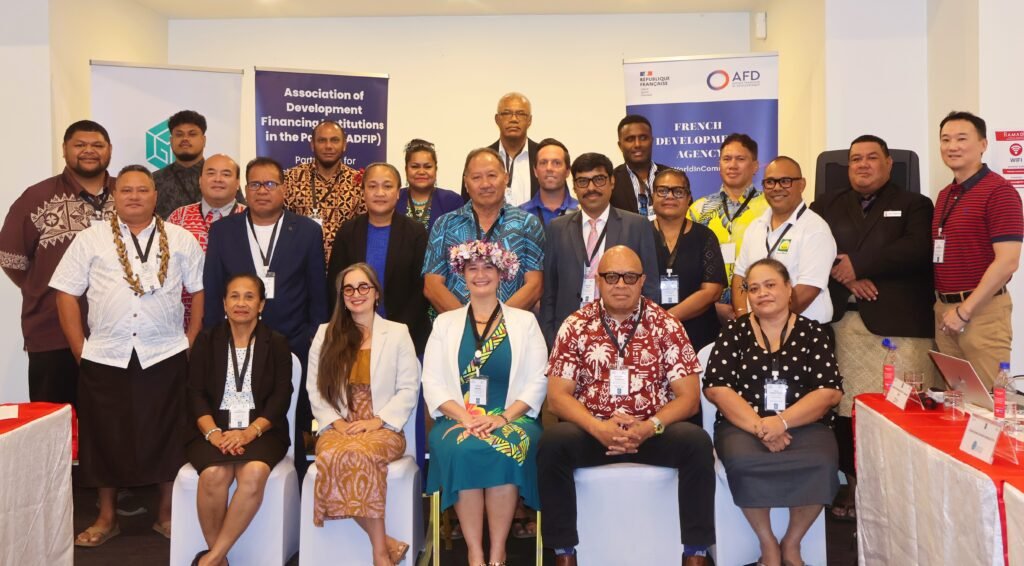
Nadi, Fiji – 16 November 2026 – Fourteen Pacific development financing institutions have agreed on three priorities to strengthen regional financing, improve access to climate finance and expand financial inclusion, following the Association of Development Financing Institutions in the Pacific (ADFIP) 2026 Annual General Meeting and Development Partners Forum held in Nadi on 5–6 November.
The members, from 11 Pacific countries and the regional Pacific Islands Development Bank, agreed to focus their 2027 work on climate and sustainable finance, partnerships and capital mobilisation, and digital transformation and financial inclusion.
The two-day gathering also brought together eight development partner organisations to discuss practical ways to increase investment, strengthen regional cooperation and address barriers limiting the ability of Pacific development banks to finance development.
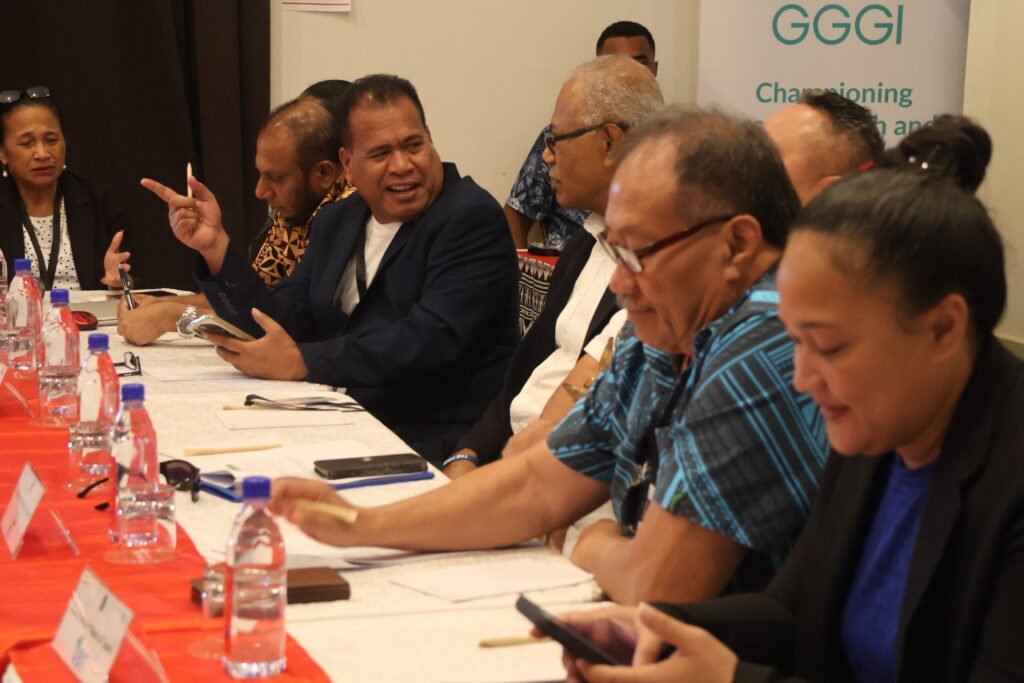
The AGM and Development Partners Forum were supported by the Global Green Growth Institute (GGGI), with funding from the Agence Française de Développement (AFD) through the Greening the Pacific Financial Systems (GPFS) programme.
GGGI serves as ADFIP’s interim Secretariat, supporting the association’s efforts to strengthen member engagement, institutional capacity, regional cooperation and access to sustainable finance across the Pacific.
Through the GPFS programme, GGGI and AFD are working to strengthen Pacific financial systems, promote green finance, and improve the capacity of financial institutions to mobilise investment for climate action and sustainable development.
Partnerships needed to unlock Pacific finance
A key message from members throughout the meeting was clear: partnerships matter, but scale remains one of the biggest barriers to financing development across the Pacific.
Pacific development banks play a critical role in financing farmers, fishers, small businesses, housing, infrastructure and community resilience, particularly in outer islands and areas where commercial lending is limited.
However, smaller balance sheets, high funding costs, and the expense of project preparation and accreditation make it difficult for these institutions to access larger pools of climate and development finance.
Members called for stronger partnerships, programme-level funding for project preparation, financing arrangements suited to Pacific institutions and more harmonised reporting requirements.
The Development Partners Forum on 6 November brought together representatives from the Asian Development Bank (ADB), Pacific Islands Forum Secretariat (PIFS), United Nations Capital Development Fund, Tower Insurance, Conservation International, Sugar Cane Growers Fund, and Finance in Common (FICs).
Discussions covered correspondent banking, capital mobilisation, parametric insurance and nature-positive finance, with a focus on identifying opportunities for practical collaboration.
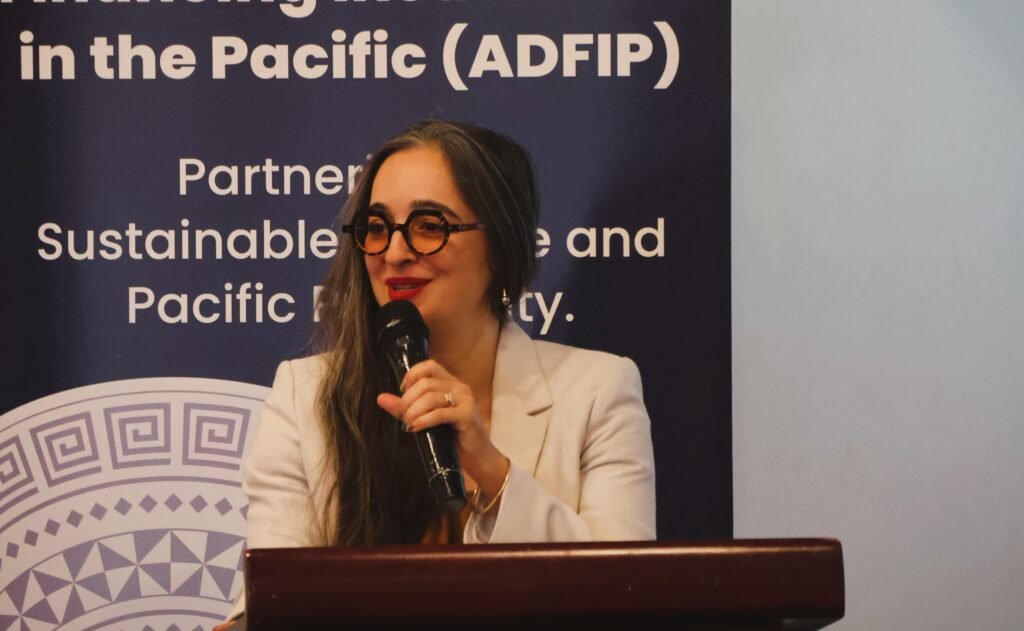
Head of AFD Group in Fiji, Ms. Elodie Vitalis in her opening remark reaffirmed the importance of strengthening Pacific development banks as part of the region’s climate finance agenda.
“Strengthening development banks is not a side issue. It is at the heart of the Pacific climate finance agenda,” Ms. Vitalis said.
She highlighted the unique role these institutions play in reaching communities, financing long-term development and supporting investments that commercial lenders may not be able to take on.
“Very often, you are the only ones there. You lend for the long term. You reach the outer islands. You take risks that others will not take.”
Ms. Vitalis also emphasised the importance of turning climate finance commitments into practical benefits for Pacific communities, including farmers, small businesses, and families.
Development finance is about people
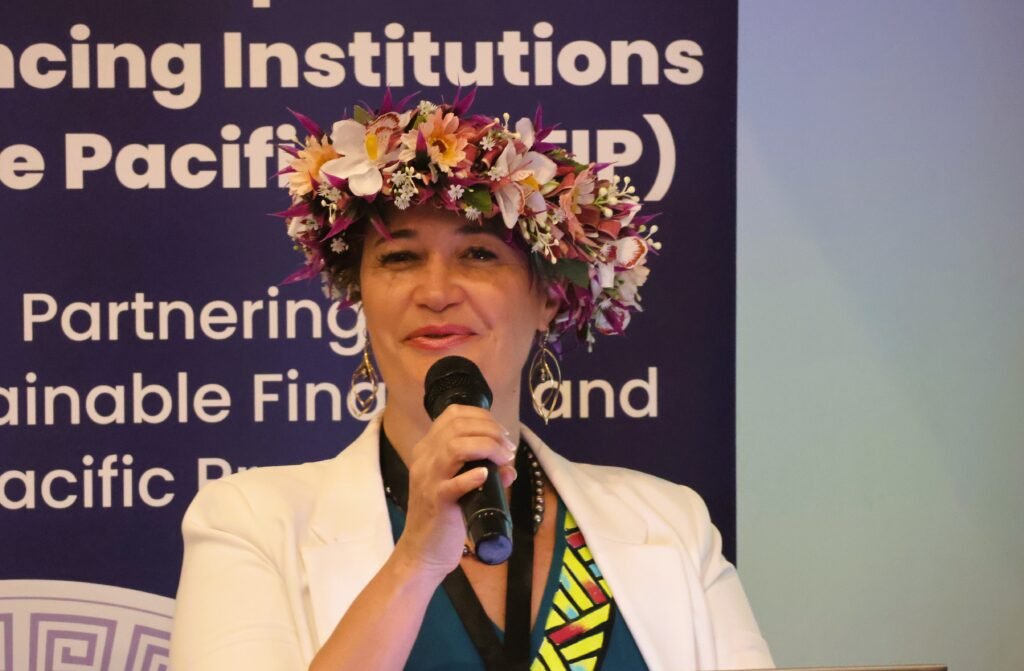
ADFIP Chairperson and Chief Executive Officer of the Bank of the Cook Islands, Ms. Jennifer Henry, said the association provides an important platform for Pacific development banks to share experiences, strengthen institutions and work together on common challenges.
“Across the Pacific, there is no shortage of ambition, ideas or opportunity. Yet too often, the challenge is mobilising the expertise, partnerships and capital needed to turn those opportunities into reality,” Ms. Henry said.
She emphasised that the role of development finance institutions extends beyond traditional banking to creating opportunities for people and businesses across the region.
“Our role is not just simply to bank the unbanked. Our role is to make access to finance genuinely accessible and capable of creating opportunity.”
Ms. Henry said development finance must ensure more Pacific communities can participate in and benefit from economic growth, in line with the long-term aspirations of the 2050 Strategy for the Blue Pacific Continent.
Climate finance must reach Pacific communities
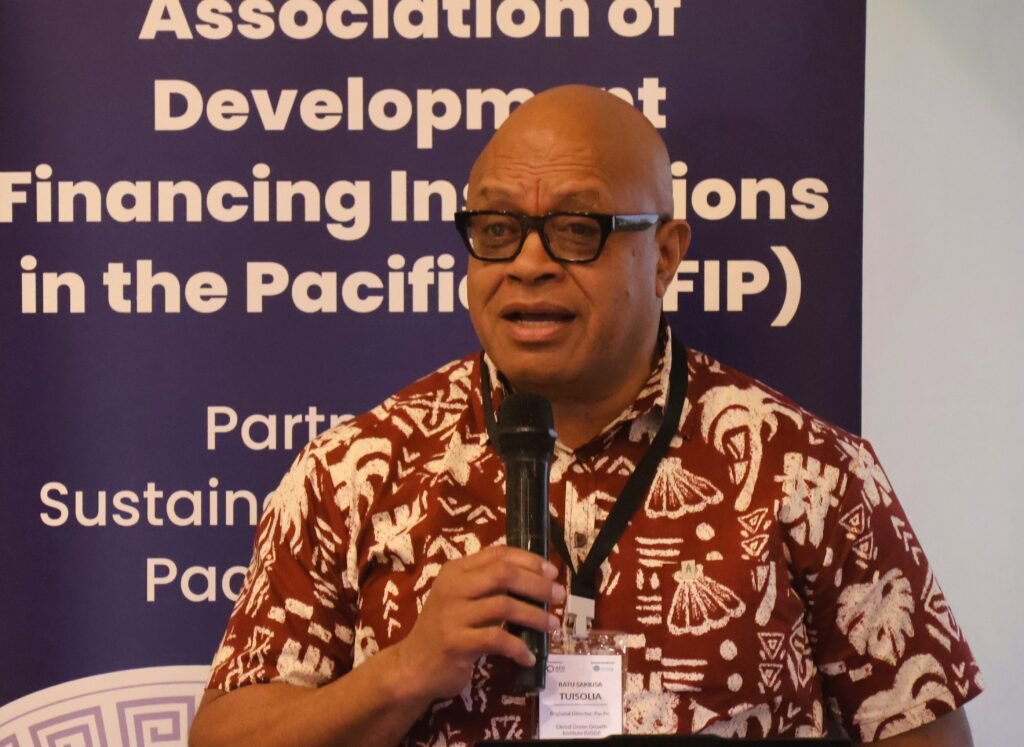
GGGI Regional Director – Pacific, Ratu Sakiusa Tuisolia, highlighted the important role development banks play in financing the Pacific’s transition to more resilient and sustainable economies.
“The transition will be won or lost in your loan books,” Ratu Sakiusa said.
He explained that climate change is already affecting the farms, boats, homes, and small businesses financed by development banks, making climate risk an important consideration in lending decisions.
“Climate risk is not a separate issue from your work. It is credit risk, and it is already on your balance sheets.”
Ratu Tuisolia also highlighted the endorsement of a regional green finance taxonomy by six Pacific central banks in September 2026, providing a shared definition of green finance to help lenders, regulators and investors identify sustainable investments.
He encouraged ADFIP members to take ownership of the association and strengthen cooperation through practical knowledge sharing and peer learning.
“An association is only as strong as its members’ commitment to it. The value of this network comes from you, not from any secretariat or partner,” he said.
Three priorities for 2027
To turn the discussions into action, ADFIP members established three member-led workstreams focused on Strategy, Systems and Structure. Each workstream will have a dedicated member task force and report on progress at the 2027 AGM.
The three priorities will focus on:
- Climate and sustainable finance: Increasing the ability of development banks to finance climate resilience, renewable energy and sustainable economic activities.
- Partnerships and capital mobilisation: Building stronger relationships with development partners and improving access to funding, technical assistance and investment.
- Digital transformation and financial inclusion: Modernising banking systems and digital services while expanding access to finance for people and businesses across the Pacific.
Capability building, technical assistance and knowledge sharing will underpin all three priorities.
The AGM also reviewed progress since ADFIP’s revitalisation in 2025, including the election of a new Board, development of a business plan, two regional webinars on climate finance innovation and carbon emissions reporting, and the relaunch of its website and social media platforms.
ADFIP was established in 1986 and revitalised in 2025 following a period of reduced activity during the COVID-19 pandemic. The renewed association is strengthening its role as a member-owned and member-led platform for regional cooperation, knowledge sharing, and partnerships.
As Pacific development banks move into 2027, the focus will be on turning shared priorities into practical action, building partnerships that address the region’s financing gaps and ensuring more climate and development finance reaches the communities that need it.
About AFD
The Agence Française de Développement (AFD) is France’s public development bank, working to support sustainable development and improve living conditions in developing countries and territories. AFD finances and supports projects that contribute to economic development, climate action, environmental protection, social inclusion and resilience. In the Pacific, AFD partners with governments, regional organisations and development institutions to support sustainable development and strengthen climate resilience.
About GGGI
The Global Green Growth Institute (GGGI) is an international organisation working with member countries to advance inclusive and sustainable economic growth. In the Pacific, GGGI works with governments, financial institutions and development partners to support climate action, green investment, and sustainable development. The Greening the Pacific Financial Systems (GPFS) programme is funded by the Agence Française de Développement (AFD) and implemented by GGGI. The programme supports efforts to strengthen Pacific financial systems, improve access to green finance, and build the capacity of financial institutions to support climate action and sustainable development.
For media enquiries, contact
Kelly Vacala – Regional Communications and Knowledge Sharing Lead – Pacific
Email: kelly.vacala@gggi.org
Recent News


ADFIP Webinar Strengthens Pacific Collaboration on Climate Finance Innovation
Thursday, February 05 2026

ADFIP Elects New Board and Trustees to Strengthen Pacific Development Finance
Thursday, December 11 2025